Local SEO in the UAE: How to Own the Map When Your Competitors Don’t Even Know It Exists
I was standing in a dentist’s office in Business Bay last year — not as a patient, as a consultant. The clinic had been open for three years, had five-star reviews on Google, a beautifully designed website, and was hemorrhaging money. New patient inquiries had dropped 40% in twelve months. The owner couldn’t figure it out. “We rank on the first page for ‘dentist in Dubai,'” he told me, pulling up his laptop. I walked around the desk and looked at his screen. He was right — sort of. His website was on page one of the organic results. But above those organic results, taking up the entire visible screen on mobile, was the Google Map Pack. Three clinics. His wasn’t one of them. He didn’t even know the Map Pack existed.
That three-listing box at the top of local search results captures somewhere between 42% and 50% of all clicks for local queries, depending on which study you read. For service businesses in the UAE — clinics, restaurants, salons, law firms, repair shops, gyms — it’s where the money is. And a staggering number of businesses in this country either ignore it completely or manage it so poorly that they might as well not be listed at all.
Why Most UAE Businesses Are Invisible Where It Matters
The UAE has a particular version of this problem that you won’t find in most local SEO guides. Start with the basics: Google Business Profile, the free listing that determines whether you show up in the Map Pack, is chronically undermaintained by businesses here. I’ve audited hundreds of GBP listings for UAE companies and the same issues come up over and over. Wrong business hours — especially during Ramadan, when operating hours shift for weeks and almost nobody updates their listing. Incorrect phone numbers because the business switched from a DU line to an Etisalat line and forgot to update Google. Photos from five years ago showing an interior that’s been completely renovated since.
Then there’s the category problem. Google lets you select business categories from a predefined list, and the right category choice directly affects which searches you appear for. But many UAE businesses pick categories that are too broad, too narrow, or just wrong. A physiotherapy clinic listed as “hospital” won’t show up for “physiotherapy near me.” A shawarma restaurant listed as “Middle Eastern restaurant” is competing in a much wider pool than necessary when “shawarma restaurant” is an available category. These aren’t minor details. Category selection is one of the top three ranking factors for the Map Pack.
The multilingual dimension makes it worse. A business that serves Arabic-speaking customers but has its Google Business Profile entirely in English is invisible to a significant chunk of its potential market. Google does some automatic translation, but it’s inconsistent and unreliable. The business name, description, services, and posts on your GBP should reflect the languages your customers actually use.
Local SEO Is Not a Smaller Version of Regular SEO
This is where most businesses — and frankly, most agencies — get it wrong. They treat local SEO as a subset of their broader SEO strategy. Optimize the website, add some location keywords, claim the Google listing, done. But local search operates on a fundamentally different algorithm. Google uses a separate set of ranking factors for the Map Pack than it does for organic results. Proximity to the searcher, GBP completeness, review signals, citation consistency — these factors barely matter for organic rankings but dominate local rankings.
In the UAE, proximity matters even more than it does in larger countries. The population is concentrated in a few urban corridors — Dubai Marina to Downtown, Deira to Bur Dubai, Abu Dhabi Island to Khalifa City. When someone in JLT searches for “Italian restaurant near me,” Google draws a tight radius. A restaurant in JVC — literally a ten-minute drive away — might not appear at all. Understanding how Google defines “near me” in the UAE’s dense urban layout, and optimizing for the specific neighborhoods where your customers live and work, is the difference between showing up and being filtered out.
What Drives Local Rankings in the UAE
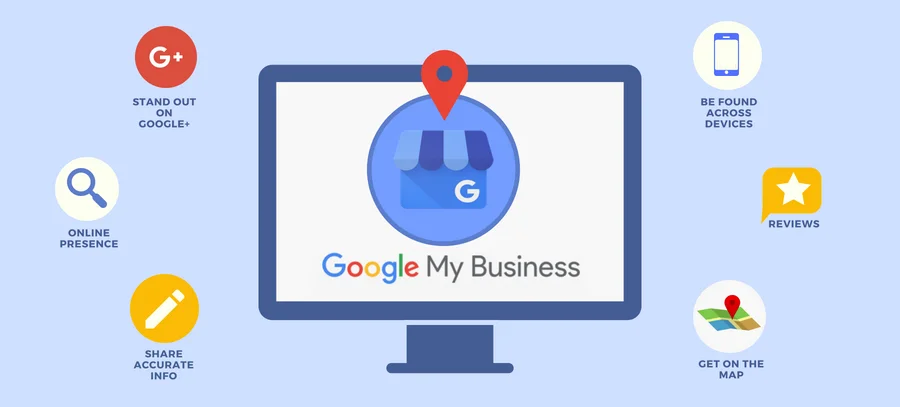
Google Business Profile optimization is the foundation, and it goes well beyond just claiming your listing. Every field matters. Your primary category should be the most specific option available. Your business description should include the services you offer and the areas you serve, written naturally in both English and Arabic if you serve both audiences. Your hours need to be accurate year-round, including special hours for public holidays and Ramadan. Your service area, if you’re a service-area business rather than a storefront, needs to be set correctly — and in the UAE, that often means specifying individual neighborhoods or communities rather than just “Dubai.”
Reviews are the second biggest lever, and this is where UAE businesses have a genuine cultural advantage. Customer relationships in this market tend to be more personal than in Western markets. People here are often willing to leave a review when asked directly — the conversion rate on review requests in the UAE is higher than what I’ve seen in the US or UK. The key is making the ask systematic. Every satisfied customer should receive a direct link to your Google review page, ideally via WhatsApp since that’s the dominant communication channel for business in this region. Respond to every review, positive or negative, in the language it was written in. Google tracks response rate and speed, and both factor into your visibility.
Citation consistency is the third pillar, and it’s where the UAE gets complicated. A citation is any online mention of your business name, address, and phone number. Google cross-references these mentions across the web to verify your legitimacy. If your business name is slightly different on your website, your GBP listing, your listing on Bayut or Dubizzle, your free zone registration, and your social media profiles, Google’s confidence in your data drops. This is especially common with UAE businesses that have both an English and Arabic business name — inconsistency between the two across platforms confuses the algorithm.
Local content on your website ties everything together. Pages targeting specific emirates, neighborhoods, or communities — “Dental Implants in Abu Dhabi,” “Physiotherapy in JBR,” “Corporate Catering for DIFC” — give Google location relevance signals that complement your GBP optimization. These pages need real, useful content, not thin keyword-stuffed templates. Write about the specific needs of customers in that area. Mention landmarks, nearby facilities, parking information, public transport access. The specificity is what makes it work.
The Local Search Landscape Is Shifting Under Your Feet
Two trends are reshaping local SEO in the UAE right now. The first is the rise of “near me” searches, which have more than doubled in the region over the past three years. Mobile search dominates here — the UAE has one of the highest smartphone penetration rates in the world, over 96%. People search on the move, while walking through a mall, sitting in traffic, or standing in a neighborhood they’ve never visited before. If your business doesn’t appear for “near me” queries in your immediate area, you’re losing customers to competitors who might offer an inferior service but happen to have a better-optimized local presence.
The second trend is Google’s increasing integration of local results into broader queries. Searches that wouldn’t have triggered a Map Pack a year ago now show one. “Best birthday cake” in Dubai now returns a Map Pack. “Emergency plumber” returns a Map Pack. “Abaya alterations” returns a Map Pack. Google is interpreting more and more queries as having local intent, which means local SEO is becoming relevant for businesses that never thought they needed it.
A Practical Local SEO Checklist for UAE Businesses
Claim and verify your Google Business Profile if you haven’t already. If you have, log in and audit every field. Is your primary category the most specific option available? Is your phone number the one customers actually call? Are your hours correct right now, today? Do you have at least twenty photos uploaded, including recent interior shots, exterior shots, and team photos? Have you written a business description that includes your services, your location, and the languages you operate in?
Set up a review generation system. This doesn’t need to be complicated. Create a short link to your Google review page. Add it to your WhatsApp business auto-replies. Train your front desk staff or service team to send the link after positive interactions. Aim for a steady trickle of reviews — two or three per week is better than thirty in one burst. Google’s algorithm is suspicious of sudden review spikes, and in the UAE, competitors flagging fake reviews is common enough that organic pacing protects you.
Audit your citations across every platform where your business appears. Google your business name and check every listing. Is the name, address, and phone number identical everywhere? Pay special attention to platforms popular in the UAE: Google Maps, Bayut, Dubizzle, Zomato (for restaurants), Practo (for healthcare), and the relevant free zone directories. Fix inconsistencies yourself where possible; use a citation management tool for scale.
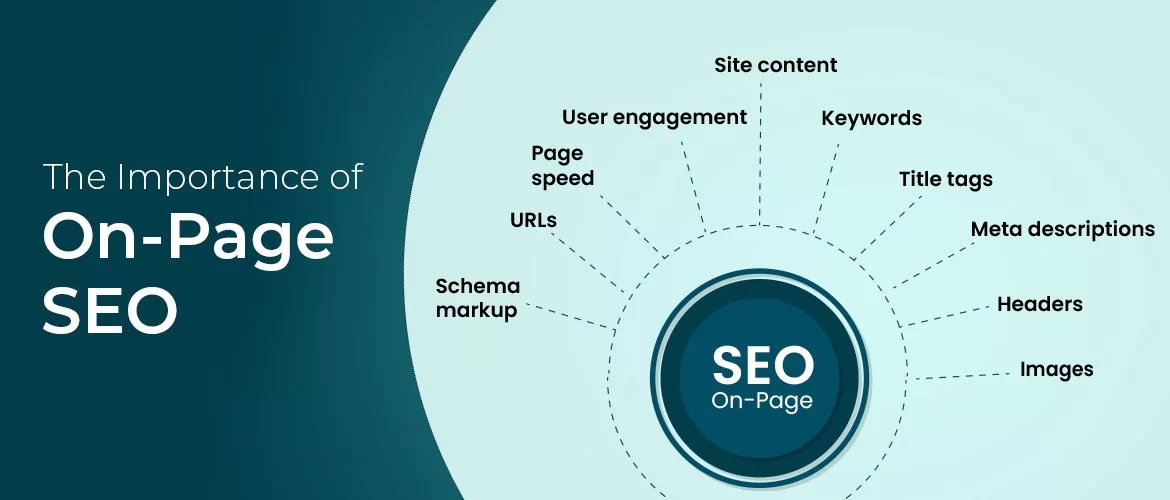
Build location-specific pages on your website for every area you serve. Not duplicated templates — genuinely different pages with locally relevant content. If you’re a cleaning company operating in Dubai Marina, JVC, and Arabian Ranches, the customer concerns and service logistics are different in each area. Write to that reality. Include schema markup with LocalBusiness structured data on each page so Google can parse your location information cleanly.
Post on your Google Business Profile weekly. GBP posts — updates, offers, events, photos — signal to Google that your listing is active and maintained. Most UAE businesses never post once after claiming their listing. Posting consistently, even briefly, puts you ahead of the majority of your local competitors. Write posts in both English and Arabic if your audience is bilingual.
Where the Opportunity Differs by Business Type
For restaurants and cafes, photos and reviews dominate. Food photography on your GBP drives clicks more than any other factor. Menus uploaded directly to Google (not just linked to your website) appear in search results and influence decision-making before the customer ever visits your site. If you serve specific cuisines, make sure your categories reflect that — “Lebanese restaurant” performs differently than “Mediterranean restaurant” for local searches.
For healthcare providers, the trust signals matter most. Google holds medical businesses to higher standards under its YMYL (Your Money, Your Life) guidelines. Accurate credentials, licensing information referenced on your website, and a strong review profile with detailed patient testimonials (respecting privacy, of course) make the difference. Healthcare is also one of the sectors where Arabic GBP optimization has the highest payoff — a large segment of patients prefer Arabic when searching for and evaluating medical providers.
For home services — cleaning, maintenance, pest control, moving — service-area optimization is everything. You don’t have a storefront customers visit, so your GBP needs to communicate exactly which areas you cover. Radius-based service areas work, but in the UAE, community-level specificity wins. A listing that explicitly serves “Dubai Silicon Oasis, Dubai Sports City, Motor City, and JVC” will outperform one that simply says “Dubai” for searches originating in those communities.
The Clinic That Came Back
That dentist in Business Bay? We rebuilt his local presence from scratch. Corrected his GBP categories, uploaded forty new photos, launched a WhatsApp-based review request system, created neighborhood landing pages for Business Bay, Downtown, and DIFC, and started posting weekly GBP updates in English and Arabic. He didn’t change anything about his services. Didn’t lower his prices. Didn’t run ads. Within three months, he was in the Map Pack for his top eight keywords. Within six months, new patient inquiries were higher than they’d ever been — including during his first three years combined.
Local SEO doesn’t require a massive budget or a complicated strategy. What it requires is attention to the details that your competitors are ignoring — and in the UAE, that list of ignored details is long. Every unclaimed GBP listing, every outdated phone number, every missing Arabic description is a gap you can walk right through. The customers are already searching. They’re looking at the Map Pack right now, in your neighborhood, for exactly what you offer. The only question is whether they’ll find you or the business next door.