Technical SEO in the UAE: The Invisible Foundation That Makes or Breaks Everything Else
A luxury hotel group in Dubai spent AED 300,000 over eight months on content marketing and link building. High-quality work — original guides, features in regional publications, partnerships with travel influencers. Their content was better than anything their competitors were publishing. Their backlink profile was strong and growing. And their organic traffic barely moved. Not a slow climb. Flat. The kind of flat that makes a CMO start questioning whether SEO works at all.
We ran a technical audit. The findings were ugly. Google was only indexing 40% of their pages. The site had been migrated to a new CMS six months earlier, and the migration had quietly broken the XML sitemap, created thousands of redirect chains, and left the Arabic version of the site trapped behind JavaScript that Google’s crawler couldn’t render. Eight months of excellent content, published on a site that Google could barely read. It was like hiring a world-class chef and then locking the restaurant door.
Technical SEO isn’t the exciting part of search marketing. Nobody writes case studies about fixing canonical tags. But in the UAE, where businesses routinely invest in content and links without checking whether their site’s technical infrastructure can support any of it, getting the plumbing right is often the single highest-ROI activity available. You just can’t see it from the outside.
Why Technical SEO Gets Ignored in the UAE
There are a few reasons this happens more frequently here than in more mature digital markets. The first is the agency structure. Most SEO agencies in the UAE sell packages that emphasize the visible deliverables — blog posts, backlinks, monthly reports. Technical audits and fixes are either included as an afterthought or sold as a separate, more expensive engagement that many businesses decline. The result is campaigns built on foundations nobody has inspected.
The second reason is the web development ecosystem. The UAE market is flooded with web agencies and freelance developers, many of whom build beautiful sites with poor technical SEO fundamentals. Custom-built WordPress themes with bloated code. Single-page applications built entirely in React or Angular with no server-side rendering. Shopify and WooCommerce stores running thirty plugins that inject conflicting schema markup. The site looks great to a human visitor and is a disaster for a search engine crawler.
The third reason is specific to the region: multilingual site architecture is hard, and most developers in the UAE get it wrong. Running a site in English and Arabic isn’t just a matter of translating content. It requires hreflang implementation, proper URL structures (subdirectories vs. subdomains vs. separate domains), bidirectional text handling, and separate metadata for each language. A mistake in any of these areas can result in Google serving the wrong language version to the wrong audience, or worse, ignoring one language version entirely.
What Technical SEO Actually Controls
Think of technical SEO as the answer to three questions Google asks about every website. Can I find all your pages? Can I understand what’s on them? And is the experience good enough that I’d want to send people there?
The first question — crawlability — is about whether Google can discover and access your content. Broken sitemaps, blocked resources in robots.txt, orphaned pages with no internal links, infinite crawl loops generated by faceted navigation — these are the kinds of issues that prevent Google from even knowing your content exists. You could publish the best article ever written about luxury hotels in Dubai, and if it’s not in the sitemap and has no internal links pointing to it, Google may never find it.
The second question — indexability — is about whether Google chooses to include your pages in its index after crawling them. Duplicate content, missing or conflicting canonical tags, thin pages with little unique value, noindex tags accidentally applied to important pages — these issues mean Google finds your content but decides not to store it. In the UAE, duplicate content is epidemic. Real estate sites with thousands of near-identical property listing pages. E-commerce stores with product variations that generate separate URLs for every color and size. Hotel sites with city pages, area pages, and neighborhood pages that all say roughly the same thing in slightly different words.
The third question — page experience — is about speed, stability, and usability. Core Web Vitals, mobile responsiveness, HTTPS security, intrusive interstitial penalties. In the UAE, where mobile accounts for over 70% of web traffic and network speeds vary significantly between operators and locations, page speed is a ranking factor with real teeth. A site that loads in two seconds on DU fiber in Dubai Marina might take eight seconds on a mobile connection in Al Ain. If your technical SEO doesn’t account for the full range of connection scenarios your UAE audience experiences, you’re optimizing for the best case and losing everyone else.
The Technical Problems That Hit UAE Sites Hardest
Hreflang misconfiguration is the number one technical SEO issue I see on UAE websites. Hreflang tags tell Google which language and regional version of a page to serve to which audience. For a site with English and Arabic content targeting the UAE, you need hreflang tags on every page that specify both language versions and their relationship to each other. Get this wrong — and the error rate on UAE sites is alarmingly high — and you end up with Arabic pages ranking for English queries, English pages showing up for Arabic searchers, or Google ignoring your Arabic content entirely because it thinks it’s duplicate content of the English version.
The correct implementation looks straightforward on paper: every English page references its Arabic equivalent, and vice versa, using the right language-region codes (en-ae for English UAE, ar-ae for Arabic UAE). In practice, it breaks constantly. CMS updates overwrite tags. Developers hard-code URLs that change during migrations. Arabic pages get published without corresponding hreflang annotations. And because hreflang errors are invisible to the average user — the site looks fine in a browser — they go undetected for months.
Site speed in the UAE context is the second major issue. The country has excellent internet infrastructure in urban areas, but there’s a meaningful performance gap between fiber connections and mobile data, between peak hours and off-peak, and between content served from local CDN nodes versus origin servers in Europe or the US. Many UAE businesses host their sites on servers in Frankfurt, London, or Virginia because that’s where their development agency is based. Adding a CDN with edge nodes in the Middle East — Cloudflare, AWS CloudFront, and Fastly all have UAE or nearby points of presence — can cut load times by 40-60% for local users. It’s one of the simplest technical wins available, and most businesses haven’t done it.
JavaScript rendering is the third common failure point. Modern web frameworks like React, Next.js, Vue, and Angular are popular with UAE web agencies because they enable slick, app-like user experiences. But if the site relies on client-side JavaScript to render content, Google may not see that content at all — or may see it with a delay that affects indexing. Google has gotten better at rendering JavaScript, but it’s still a secondary process that happens after initial crawling, and complex JavaScript applications with dynamic routing, lazy-loaded content, and API-dependent data often fall through the cracks. For UAE sites serving content in two languages with dynamic pricing, availability, or location-based information, this is a real risk.
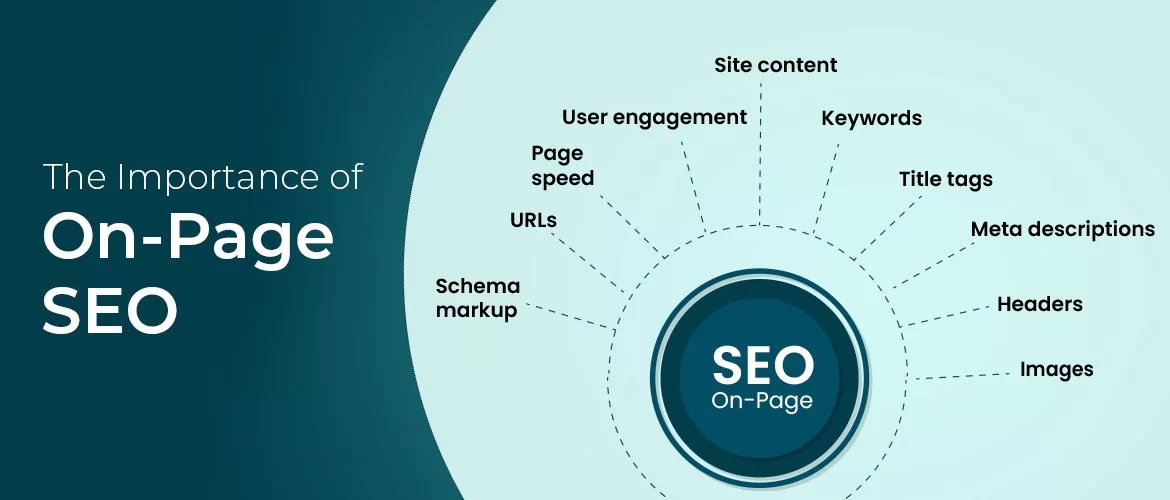
Structured data gaps are the fourth issue. Schema markup — the code that tells Google what your content represents in machine-readable format — drives rich results in search: star ratings, price ranges, FAQs, event dates, business hours. UAE businesses leave these rich result opportunities on the table at a much higher rate than their counterparts in the US or UK. A restaurant without Recipe or Restaurant schema misses out on the visual search features that drive clicks. A clinic without MedicalOrganization and Physician schema loses trust signals that competitors gain for free. And almost nobody in the UAE implements schema in Arabic, which is a missed opportunity since Google supports it.
A Technical SEO Audit Framework for UAE Businesses
Start with crawlability. Run your site through Screaming Frog or Sitebulb and answer these questions: How many pages does the crawler find? How does that compare to the number of pages in your XML sitemap? How does that compare to the number of pages Google reports in Search Console’s index coverage report? If these three numbers are dramatically different, you have a crawlability problem. Look for pages the crawler finds that aren’t in the sitemap (orphaned content), pages in the sitemap the crawler can’t reach (broken internal linking), and pages Google has crawled but excluded from the index (quality or duplication issues).
Next, audit your hreflang implementation. If you run a bilingual site, use a tool like Ahrefs’ Site Audit or the hreflang testing tool from Merkle to check every page. Every English page should reference its Arabic counterpart, and every Arabic page should reference its English counterpart. Self-referencing hreflang tags should be present on both versions. The x-default tag should point to your primary language version. Check for common errors: URLs in hreflang tags that return 404s, pages that reference themselves but not their alternate, and mismatched language codes.
Audit your page speed using Google PageSpeed Insights and test from both a desktop connection and a mobile connection. Pay attention to Largest Contentful Paint (LCP), which measures how quickly the main content loads, and Cumulative Layout Shift (CLS), which measures visual stability. For UAE sites, test from the UAE if possible — tools like WebPageTest let you select test locations including the Middle East. If your LCP exceeds 2.5 seconds on mobile from a UAE test location, that’s a problem worth fixing. Common culprits: uncompressed images, no CDN, render-blocking JavaScript, and third-party scripts from analytics and chat widgets that load before your actual content.
Review your structured data using Google’s Rich Results Test. Check your homepage, a key service or product page, and a blog post at minimum. Look for errors and warnings in existing schema, and identify opportunities to add schema you’re missing. For UAE businesses, the highest-impact schema types are LocalBusiness (with address, hours, and service area), Organization (with logo and social profiles), FAQ (for information-heavy pages), and Product or Service (for commercial pages). If you serve multiple locations, each location should have its own LocalBusiness schema with its specific address and phone number.
Finally, check your mobile experience. Google uses mobile-first indexing, meaning it crawls and indexes the mobile version of your site, not the desktop version. Open your site on a phone and use it like a customer would. Are navigation menus accessible? Do forms work? Does content display without horizontal scrolling? Are tap targets large enough? Then check Google Search Console’s Mobile Usability report for any flagged issues. In a market where the majority of searches happen on mobile, a broken mobile experience isn’t a minor technical issue — it’s a direct revenue leak.
When Technical SEO Becomes Urgent
There are specific moments when technical SEO moves from “should do” to “must do immediately.” A site migration — new CMS, new domain, new URL structure — is the most critical. Migrations that aren’t handled with detailed redirect mapping, updated sitemaps, and post-launch crawl verification are responsible for more organic traffic crashes in the UAE than any algorithm update. If you’re planning a migration, hire someone whose primary job is technical SEO to manage the transition. Not the development agency. Not the design team. Someone who understands how Google processes URL changes and can monitor the impact in real time.
A sudden traffic drop is the second trigger. If your organic traffic falls by 20% or more within a week and there’s no obvious seasonal explanation, run a technical audit before you do anything else. More often than not, the cause is technical — an accidental noindex tag deployed in a code update, a robots.txt change that blocked critical sections, a server configuration change that broke page rendering. These issues are fixable, but only if you find them fast.
Launching a new language version of your site is the third trigger. Adding Arabic to an English site (or vice versa) introduces hreflang complexity, potential duplicate content issues, and rendering challenges with right-to-left text. Plan the technical architecture before writing a single word of translated content. The URL structure (example.com/ar/ vs. ar.example.com), the hreflang strategy, the metadata approach, and the internal linking between language versions all need to be decided and implemented correctly from day one. Retrofitting a broken multilingual architecture is three times more expensive than building it right the first time.
The Hotel That Unlocked Eight Months of Lost Work
That luxury hotel group from the opening? Once we fixed the technical issues — rebuilt the sitemap, resolved the redirect chains, implemented server-side rendering for the Arabic site, and corrected the hreflang tags across 1,200 pages — something interesting happened. The organic traffic didn’t just recover. It surged. All the content they’d published and all the links they’d earned over the previous eight months suddenly had a functioning foundation to work on. The site went from indexing 40% of pages to 94% within six weeks. Traffic doubled in three months. Not because they created anything new, but because Google could finally see what had been there all along.
That’s the uncomfortable truth about technical SEO. It doesn’t produce results on its own. It doesn’t replace content or links or strategy. What it does is determine whether everything else you invest in actually works. In the UAE, where businesses are spending real money on digital marketing and expecting real returns, a site with broken technical fundamentals is the most expensive kind of waste — the kind where you’re paying for work that never had a chance of paying off. Fix the foundation first. Everything built on top of it becomes worth more the moment you do.