

international SEO services

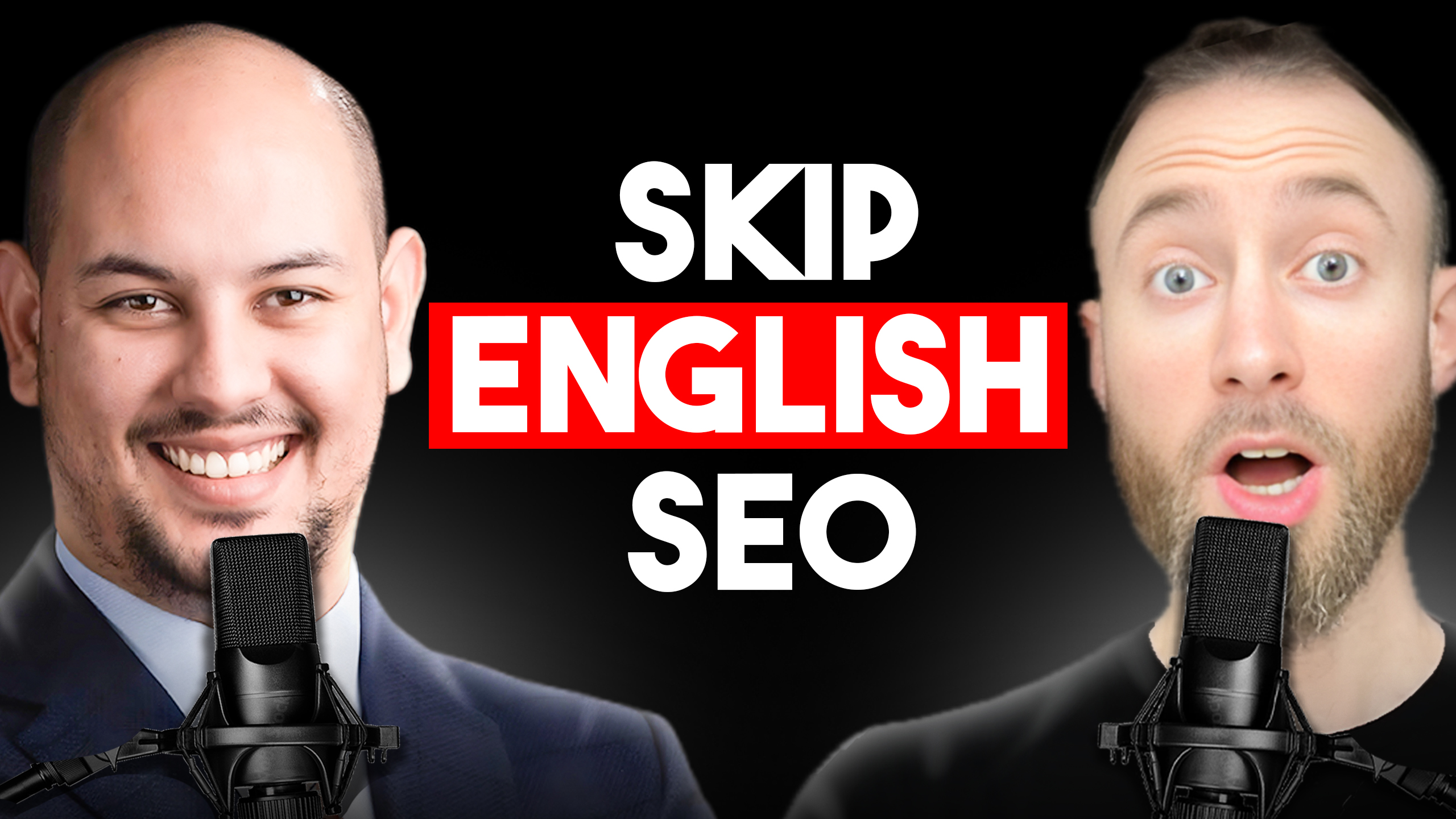
Multilingual SEO Podcast : RHILLANE Ayoub x Edward STURM :  Everyone’s Fighting Over English Keywords. Here’s an Easier Path. 

There’s an assumption baked into most SEO strategies: English keywords are where the money is. The logic seems sound. Larger market, more search volume, higher potential revenue. So agencies and businesses pile in, throwing massive budgets at content production and link building, fighting brutal battles for page one real estate. But there are smarter ways to get clicks. When Rhillane Ayoub, CEO of Rhillane Marketing Digital and multilingual SEO expert, joined Edward Sturm on The Edward Show, he shared one of the most overlooked opportunities in SEO today.

Sommaire

The Crowded Room Problem

The English-language SEO market is extraordinarily saturated. Every worthwhile keyword has dozens, sometimes hundreds, of well-funded competitors targeting it. Established players have years of domain authority, thousands of backlinks, and content teams producing at scale.

Breaking through requires significant investment with uncertain timelines. A competitive keyword might take 18 months of sustained effort before you see meaningful results. And by meaningful, we often mean page two. The return on investment math gets uncomfortable quickly.

Meanwhile, non-English markets present a fundamentally different landscape.

What We Told Edward Sturm

During our conversation on The Edward Show, we made a statement that caught some listeners off guard: SEO in other languages is dramatically easier than English SEO.

This wasn’t hyperbole. It was a direct observation from years of ranking websites across French, Arabic, and other language markets.

Google has gaps to fill. The search engine needs quality content in every language it serves, but the supply in non-English markets hasn’t kept pace with demand. When you produce genuinely good content optimized for these markets, Google responds. Often faster and more generously than anyone accustomed to English SEO would expect.

The same keyword that requires 18 months and substantial budget to crack in English might take three months in French. Sometimes less. And the competition you face along the way operates at a different level of sophistication.

Beyond Faster Rankings

Speed is only part of the equation. What surprised us initially, and what we emphasized to Edward’s audience, is that you don’t just rank faster in non-English markets. You rank for more keywords.

English SERPs are so thoroughly optimized that ranking for one keyword rarely brings meaningful visibility for related terms. Every variation has its own set of entrenched competitors.

Non-English markets work differently. Publish a well-optimized page targeting a primary keyword, and you’ll often pick up rankings for dozens of related terms you didn’t explicitly target. The algorithm is actively looking for quality content to serve these queries. When it finds something good, it uses it broadly.

This compounds over time. The same effort that might earn you visibility for ten keywords in English could earn you visibility for fifty in French or Arabic.

A Case Study in Competition

We shared a specific example with Edward to illustrate the point: a client in the men’s underwear niche targeting the French market.

In the United States, this category is brutally competitive. You’re facing Amazon, Calvin Klein, established D2C brands with venture backing, and countless affiliates fighting for informational keywords. Breaking into the top positions requires serious resources and long timelines.

In France, we achieved top 3 rankings on high-value commercial keywords. Position #1 on several targeted terms. The client now competes directly with major international brands and wins.

The product wasn’t different. The SEO fundamentals weren’t different. The market was different.

Local SEO Tells the Same Story

The pattern holds for local businesses as well.

We took on a plumber in Belgium who had been working with another agency for months without meaningful progress. Rankings were stagnant. Leads weren’t materializing.

Our intervention focused on fundamentals: a technical audit that uncovered redirect issues, strategic submissions to niche-relevant directories, systematic local citation building, and proper Google My Business optimization.

The result: position #1 in Google Maps across their entire service area.

This wasn’t a sophisticated campaign. It was competent execution in a market where competent execution is rare.

Why The Gap Exists

A reasonable question: if non-English SEO is so much easier, why isn’t everyone doing it?

Several factors maintain the opportunity.

First, genuine multilingual SEO requires actual expertise. Running content through translation software doesn’t work. The cultural nuances matter. Regional search behaviors differ significantly. Arabic markets don’t search the way French markets do. French-speaking Belgium has different patterns than French-speaking Morocco.

Second, technical implementation is more complex. Hreflang tags require careful management. Done incorrectly, they create confusion rather than clarity. Our approach involves manual page-by-page implementation and strategic decisions about what actually needs translation.

Third, link building in non-English markets requires different networks. The directories that matter are different. The outreach strategies that work are different. Agencies built around English-language link building can’t simply redirect their existing infrastructure.

Other Paths to Easier Traffic

Multilingual SEO isn’t the only way to escape the hypercompetitive English keyword battlefield. The underlying principle, finding markets where supply hasn’t caught up with demand, applies across multiple channels.

Long-tail keyword clusters. Instead of targeting “running shoes,” target the hundreds of specific queries around particular use cases, foot conditions, or activity types. Individual search volumes are lower, but competition drops dramatically and conversion intent is often higher.

Emerging platforms. When a new platform gains traction, early content creators face minimal competition. The businesses that built YouTube presences in 2010 or TikTok presences in 2018 captured audiences that would be enormously expensive to reach today.

Adjacent content categories. Your competitors are all creating the same style of content for the same keywords. Different formats like interactive tools, calculators, original research, and video can capture traffic that text-based competitors can’t reach.

Local and hyper-local targeting. National keywords are contested. City-level and neighborhood-level keywords often aren’t. A financial advisor targeting “retirement planning” faces impossible competition. The same advisor targeting “retirement planning [specific suburb]” might face almost none.

Voice search optimization. Conversational queries are growing rapidly, and most businesses haven’t adapted their content to match how people actually speak to their devices.

The common thread: stop competing where everyone else is competing. The returns on being early or different consistently outperform the returns on being marginally better in a crowded field.

The Long-Term Perspective

When discussing strategies with Edward, we emphasized sustainable approaches. The shortcuts that might accelerate results, like aggressive anchor text ratios and questionable link sources, create long-term vulnerability.

Our approach prioritizes building assets that hold their value. Rankings that survive algorithm updates. Link profiles that look natural because they are natural. The multilingual markets we operate in reward this patience.

Finding Your Empty Room

The English SEO market will remain hypercompetitive. Budgets will keep climbing. Timelines will keep extending. The agencies and businesses that thrive will be those willing to look where others aren’t looking.

For us, that meant multilingual markets. For you, it might mean something different. A platform, a content format, a geographic focus, a keyword category that the mainstream hasn’t discovered yet.

The opportunity is always somewhere. It’s just rarely where the crowd is standing.

Listen to the full conversation on The Edward Show

Picture of Ayoub Rhillane

Ayoub Rhillane

Ma vision pour RHILLANE Marketing Digital est de fusionner l’élégance du marketing digital avec la précision de la finance. En tant qu’expert en SEO et création de sites web, j’œuvre à transformer chaque donnée en une stratégie harmonieuse, où créativité et performance s’unissent pour bâtir des marques qui séduisent, convertissent et durent.

Articles récents